If there is one word that defines commercial construction in 2023, it is “uncertainty.” After several years of pandemic-driven disruption, the industry now faces a new set of challenges. High inflation, rising interest rates, persistent labor shortages, and ongoing supply chain issues have created a complex environment for developers and business owners.–
Yet, within this uncertainty lies opportunity. The nonresidential sector, particularly manufacturing, has shown surprising resilience.– And after years of relentless cost increases, there are signs that material prices are finally stabilizing.–
This article examines the key trends shaping commercial construction in 2023. Understanding these dynamics will help you make informed decisions for your projects.
A Market of Two Stories
The 2023 construction market is bifurcated. Residential construction is experiencing a significant downturn, while certain nonresidential sectors remain active.– Overall, US construction output is forecast to contract by about 3% in 2023, but this headline number masks important variations.–
Manufacturing Leads the Way
Manufacturing construction is a bright spot, with expectations of 5% growth as manufacturers move operations back to the United States.– The reshoring trend, coupled with federal incentives, has fueled investment in industrial facilities across the country.
Commercial Construction Faces Headwinds
Commercial construction is expected to be down about 5% in 2023, as virtually all commercial sectors see a pullback in square footage.– Rising interest rates have increased the cost of project financing, making some developments less viable.– Additionally, tighter credit standards and declines in commercial property values are contributing to the slowdown.–
Despite these headwinds, commercial construction spending increased just 1% over the entirety of 2023 in nominal terms.– This modest growth reflects the lingering impact of inflation on project costs rather than real expansion.
Material Costs: From Surge to Stabilization
The material cost environment in 2023 has been a study in contrasts. After two years of relentless increases, prices began to stabilize and even decline in some categories.
A Long Way from the Peak
Construction input prices remain significantly elevated compared to pre-pandemic levels. Overall, construction and commercial input prices are at 37.9% and 38.2% higher than they were three years ago.– Iron and steel are 55.9% higher than in February 2020, while concrete costs are 27.9% higher.–
Signs of Relief
However, 2023 has brought some welcome relief. Overall construction input prices were 4.9% lower in June 2023 than a year earlier, and nonresidential construction input prices were 4.5% lower.– By October, construction input prices had declined 1.2% on a monthly basis.–
Our construction cost index shows a near flattening of material, labor, and subcontractor costs for the third quarter of 2023 and an overall slowdown to the trajectory of cost increases seen since the onset of the pandemic.–
Cautious Optimism
The moderation in material prices has provided some relief for contractors and owners. However, risks remain. Concrete products rose 6.6% over 12 months, and steel mill products climbed 5%.– Some contractors are still wary about future price volatility.
Labor Shortages Persist
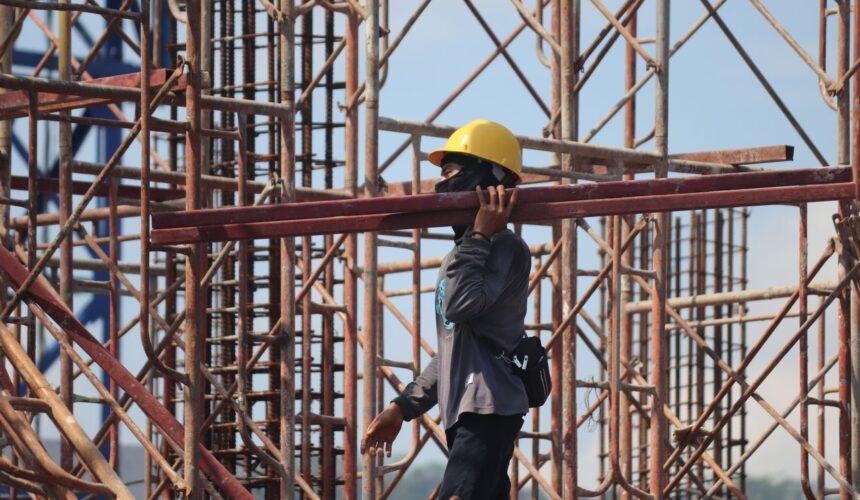
If material costs have eased somewhat, the labor shortage has not. The construction industry continues to struggle with finding enough skilled workers to meet demand.
The Numbers Tell the Story
Throughout 2023, an average of 4.6% of construction positions remained unfilled, marking the second-highest level on record, surpassed only by the previous year’s 4.9% average.– According to the Associated General Contractors of America, 89% of construction firms faced challenges in hiring skilled workers in 2023.–
The construction industry averaged more than 349,000 job openings per month in 2023.– A staggering 68% of firms report applicants lack the skills needed to work in construction.–
Why the Shortage Persists
Several factors contribute to the ongoing labor shortage. The exodus of baby boomers from the workforce continues to reduce the pool of experienced workers.– Younger workers are often not pursuing careers in the trades, and many applicants lack basic qualifications.–
The Impact on Projects
Labor shortages have significant consequences for project delivery. Delays, increased costs, and reduced profit margins are common outcomes.– Companies are competing for a limited pool of skilled workers, which is driving up wages.– Some analysts warn that the lack of workers may soon make contractors reluctant to take on new jobs.

Supply Chain: Better, but Not Fixed
Supply chains have generally functioned much better in 2023 than in 2020-2022.– However, significant challenges remain, particularly for specialized components.
The Long-Lead-Time Problem
Lead times have remained extremely long for major electrical components such as switchgear and transformers.– Some contractors and owners have also reported problems obtaining parts for elevators and air-handling equipment.–
One industry expert noted that “lead times on electrical panels, distribution gear, circuit breakers, meters and generators” remain problematic.– In the life sciences sector, material lead times can stretch from four weeks to nearly two years for generators and electrical switchgear.–
A Gradual Improvement
There is some positive news. Eleven percent of respondents in one survey expected material lead times to decrease slightly in 2023, a significant improvement from 2022 when none expected a decrease.– While supply chain issues have eased, there continues to be significant disruption and delays associated with HVAC and electrical gear.–
The New Normal
Contractors have learned to expect and adapt to supply chain challenges.– Early procurement of long-lead items has become essential to avoid significant project delays.–
The Inflation Reduction Act and Its Impact
The Inflation Reduction Act, passed in 2022, is beginning to have a tangible impact on the construction industry in 2023.
Incentives for Energy Efficiency
The Act extended and enhanced the energy efficient home credit (45L), allowing home builders who construct energy efficient homes a tax credit of up to $5,000 per home.– For multifamily housing developers, several building-related tax incentives and financing tools are now available.–
Low-Carbon Materials
The Act included $3.375 billion for the General Services Administration to invest in federal buildings and reduce carbon emissions, primarily by acquiring and installing low-embodied carbon materials.– In November 2023, the Biden administration announced a $2 billion commitment for low-carbon construction materials to drive growth in domestic asphalt, steel, concrete, and glass.–
A Long-Term Shift
While the full impact of the Inflation Reduction Act will take years to materialize, 2023 represents the beginning of a significant shift toward more sustainable construction practices. The incentives are expected to bring more skilled workers into the industry at a time when they are desperately needed.
Outlook for the Remainder of 2023
As we look toward the end of 2023, the commercial construction industry faces both challenges and opportunities.
Continued Uncertainty
High inflation, rising interest rates, and labor shortages will continue to weigh on the industry.– Commercial construction is considered the most vulnerable nonresidential sector at present.–
Resilient Sectors
Manufacturing, infrastructure, and institutional projects are expected to perform better than traditional commercial sectors.– The reshoring trend and federal infrastructure spending provide some support for industrial construction.
Cautious Optimism
While the overall market is challenging, there are reasons for cautious optimism. Material costs have stabilized. Supply chains are gradually improving. And the Inflation Reduction Act is creating new opportunities in sustainable construction.
How CLOSW Construction Navigates the 2023 Market
CLOSW Construction has adapted to the challenging 2023 environment through careful planning and proactive management.
Proactive Material Procurement
We monitor material markets closely and advise clients on optimal procurement timing. Early identification of long-lead items helps avoid project delays.–
Realistic Budgeting
CLOSW Construction provides transparent cost estimates that account for current market conditions. We help clients build appropriate contingencies into their budgets.
Strong Supplier Relationships
Our established relationships with suppliers provide advantages in pricing, priority access, and problem-solving during supply chain disruptions.
Skilled Workforce
CLOSW Construction invests in training and retention to maintain a skilled workforce. We prioritize safety and quality to attract and retain the best talent.
Ready to Start Your Commercial Construction Project?
The 2023 commercial construction market presents challenges, but with the right partner, your project can succeed. CLOSW Construction brings experience, expertise, and commitment to every project.
Contact us today for a free, no-obligation consultation. Let us help you navigate the 2023 construction landscape.